
Trauma therapy
that goes to the root.
Something happened. And even though it's in the past — your body, your relationships, and your sense of self are still carrying it. Amy Manuele, LCSW helps you trace it back to where it began, and finally start to move forward.

Amy Manuele, LCSW
EMDR · IFS · PIT-trained trauma therapist
Glowing reviews
You're not falling apart — you're carrying something heavy.
Your nervous system won't settle
Hypervigilance. Bracing. Always waiting for the next thing to go wrong — even when nothing is. Your body never got the message that the danger passed.
The past keeps showing up
The same reactions in every relationship. The same patterns you promised yourself you'd stop. It keeps appearing — in how you connect, parent, work, and see yourself.
You've been managing it alone
You've minimized it. Told yourself others have it worse. Stayed busy. Managed — until you couldn't anymore. Surviving and actually healing are not the same thing.
The job trained you to handle it
For military and first responders: you were built to compartmentalize and push through. The cost of that is real — and it deserves real attention, not a lifetime of suppression.
Waiting it out has a cost — and you've been paying it.
Trauma left unspoken doesn't just go away; it is still there, in the background. It shows up as the short fuse, the sleepless nights, the distance you keep without meaning to, the way even a good day can feel braced for impact. You build a smaller life around it and call it managing. But the patterns keep repeating — in your relationships, your parenting, the way you see yourself — until something finally helps you trace them back to where they began. The longer it goes unaddressed, the more it costs. And you deserve more than a life spent avoiding life.

Not just treating the branches
Amy doesn't believe in managing symptoms indefinitely. Her approach begins at the source — tracing the patterns, reactions, and core wounds back to where they actually started. That's where real change becomes possible.
She draws on a range of evidence-based, trauma-informed methods and tailors them specifically to you. The work is paced around your readiness — no pressure to go faster than you're able.
Whether you're working through childhood wounds, adult trauma, military or combat experience, or the cumulative weight of first responder work — the foundation is the same: understand what's underneath, and rebuild from there.
Trauma shows up in many forms — all of them are welcome here
Childhood & Family Trauma
ACEs, attachment wounds, growing up in a home shaped by addiction, dysfunction, or emotional unavailability. These early experiences write the blueprint — and that blueprint can be rewritten.
Adult Trauma
Accidents, loss, assault, medical trauma, sudden life ruptures. Adult trauma often arrives without warning and shatters a person's sense of safety. The work is rebuilding both.
Military & Combat Trauma
Active duty, veterans, and their families. The experience of service — including deployment, combat exposure, and the difficulty of coming home — is something Amy holds with training and deep respect.
First Responder Families
Police, fire, EMS — and the families carrying the weight alongside them. The secondary exposure, emotional labor, and hypervigilance that follows the job home is its own kind of trauma.
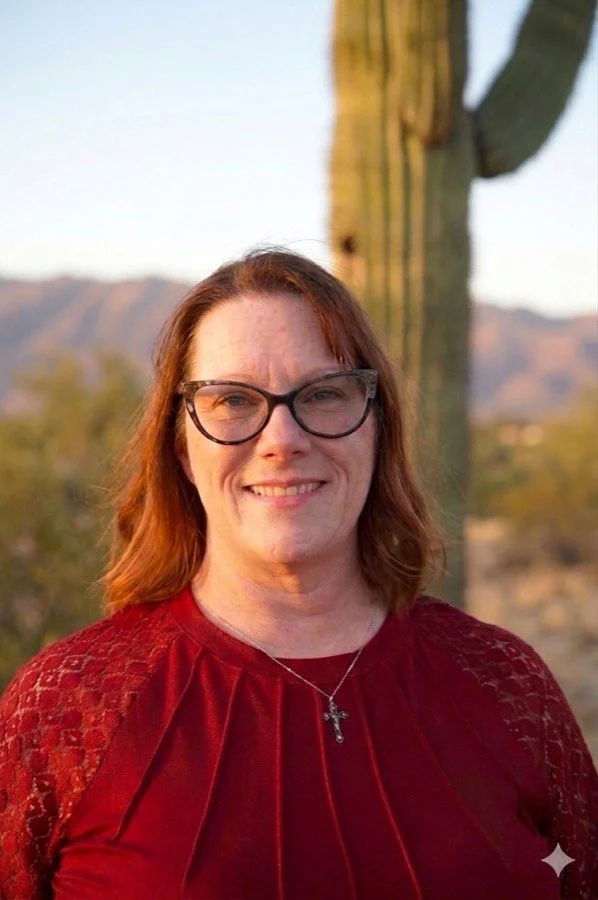
Amy Manuele, LCSW
Licensed Clinical Social Worker · Wickenburg, AZAmy has been a therapist for more than four years — but her preparation runs deeper than that. Before clinical practice, she worked as a social worker in K–12 schools, hospital settings, on a kidney transplant team, and within the VA. That range — paired with her own life as a military wife — means she's been alongside people from every walk of life, and she understands the world of service from the inside, not just the textbook.
Her specialty is trauma — particularly the kind that's been minimized, buried, or misunderstood as something else. She's trained in EMDR, PIT (Pia Mellody's model), IFS, CBT, DBT, and ART, and is completing Frank Anderson's IFS Trauma Treatment Program.
Her practice in Wickenburg, AZ is available in person, and she sees clients via telehealth across Arizona — including those for whom in-person care isn't accessible.
Amy is trained in Accelerated Resolution Therapy® (ART) — a brief, structured, evidence-based approach with a strong research base in trauma and post-traumatic stress, including among veterans and military families.
Not general talk therapy
Root-cause, not symptom management
Amy doesn't chase symptoms in circles. The work starts at the source — so you recognize patterns and process change; the changes you want to make.
Trained across the methods that matter
EMDR, IFS, PIT, CBT, DBT, ART — and still training. You get the approach your nervous system actually needs, not a one-size-fits-all protocol.
She speaks the language of service
Military, veterans, and first responder families aren't an afterthought here. As a military wife who's also worked within the VA, Amy understands what the job costs — and the people who carry it home.
A clear path — from the very first call
No surprises, no pressure. Here's exactly how the work unfolds, step by step.
Free Consultation
A 15-minute call. No pressure to share everything — just a chance to talk about what's bringing you in, see if Amy's a good fit, and ask questions before committing to anything.
First Session — Getting Oriented
Context, not pressure. Amy will get a picture of what's brought you in, what you've already tried, and what kind of support you're looking for. Nothing is required of you before you're ready.
Building the Picture Together
Gently tracing what's underneath the surface. Amy works to understand the root — not just what you're experiencing now, but how it connects to where it started. This is where the work begins to make sense.
Doing the Work, at Your Pace
Evidence-based tools — EMDR, IFS, PIT, and others — used at a pace that honors where you are. Trauma work is not one-size-fits-all. Amy tailors the approach to what your system is ready for.
Straightforward & transparent
Amy does not currently accept insurance. A sliding scale may be available for veterans and active-duty military — please inquire when you reach out.
In person & across Arizona
In-Person Office
130 E Yavapai St., Unit 3
Wickenburg, AZ 85390
Telehealth
Arizona statewide · Licensed in AZ
The things people ask before reaching out
How do I know if what I went through “counts” as trauma?
If it still affects how you feel, react, or relate today, it counts. Trauma isn't measured by how “bad” the event looks from the outside — it's about the impact. Most people who come to Amy did not think they had experienced trauma; they just knew something wasn't working.
Will I have to talk about the worst thing that happened right away?
No. Nothing is required of you before you're ready. Early sessions are about safety and understanding the bigger picture — Amy meets you where you are. This is your treatment, your goals; Amy is here to help you reach those goals.
What is EMDR, and will it bring everything back up?
EMDR is an evidence-based method that helps the brain reprocess painful memories so they lose their grip — without you having to relive every detail. It's structured and paced, and Amy will only use it when it's the right fit for where you are.
I'm a veteran or first responder — do you actually get it?
Yes. Amy has training in military and combat trauma and works with active duty, veterans, and first responder families. You won't have to explain the culture or translate what the job does to a person.
Do you take insurance, and what does it cost?
Individual sessions are $180 for 50 minutes, and the initial consultation is free. Amy doesn't currently accept insurance; a sliding scale may be available for veterans and active-duty military — just ask when you reach out.
Do we have to meet in person?
Not at all. Amy sees clients in person in Wickenburg and via secure telehealth anywhere in Arizona — whichever feels safest and most accessible for you.
You've been carrying this long enough.
The first step is a conversation. No commitment, no pressure — just a chance to talk about where you are and whether working together feels right.
Book a Free Consultation